


The Ombudsperson has consistently drawn the authorities’ attention to the need for a serious approach to protection in cases of domestic and gender-based violence


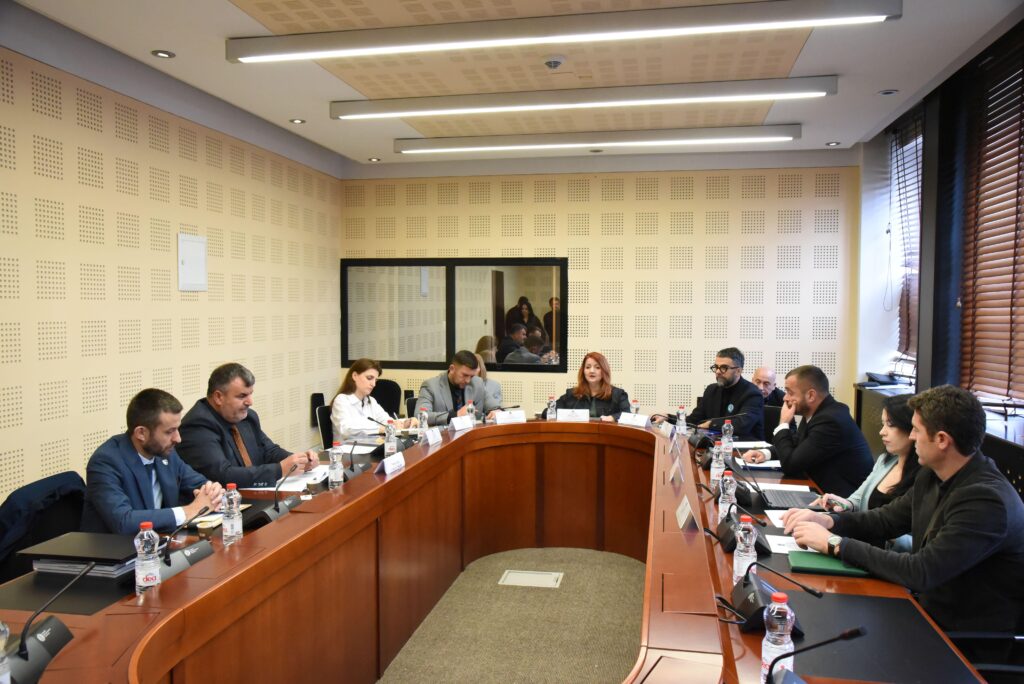
Pristina, October 30, 2026 – The Ombudsperson, Mr. Naim Qelaj, presented the institution’s work reports for the years 2023, 2024, and 2025 to the Parliamentary Committee on Human Rights, Gender Equality, and Petitions. The presentation covered the institution’s activities, its work in protecting and promoting human rights and fundamental freedoms, and the key issues identified during the reporting period.
At the beginning of the meeting, the death of a woman recently killed in Peja as a result of domestic violence was acknowledged; in response to questions from the Members of Parliament, the Ombudsperson confirmed that he has initiated investigations *ex officio*.
He added that he had previously issued reports regarding the killings of two other women—dating back to 2021 and 2022—in which he identified state failures to fulfill its positive obligations. The primary factors contributing to the violation of this right were identified as: the failure of various institutional components to take adequate and proportionate legal measures to protect the right to life and to provide protection against domestic violence. …the assessment of risk and measures for the protection of the victim. He also reminded the deputies that these reports, containing recommendations, were part of the 2022 annual report—a report that the Assembly of Kosovo voted against in 2024.
“One of the positions I have taken, and one of the recommendations I have offered, is that Kosovo needs a national-level discussion to establish gender equality, violence against women, and domestic violence as a matter of national interest—rather than addressing them merely as isolated cases. I believe we are already late in this regard, but it is better to start now,” the Ombudsperson stated before the deputies.
Referring to the Assembly of Kosovo’s voting process regarding the Ombudsperson’s report, Mr. Qelaj noted that in his 2024 report, he reiterated the Ombudsperson Institution’s position that this practice should be changed. The Ombudsperson emphasized that requiring a document to be approved or rejected by the Assembly of Kosovo conflicts with the constitutional guarantees of the Ombudsperson Institution’s independence and is inconsistent with international standards for National Human Rights Institutions (NHRIs). The Ombudsperson compared the annual reports for 2023, 2024, and 2025, noting that many human rights issues are not confined to a single year but rather recur; furthermore, in certain areas, subsequent reports indicate that institutional recommendations and measures have yet to bring about the necessary change.
Mr. Qelaj highlighted that he has published reports for three consecutive years concerning the implementation of the Law on Protection from Discrimination. He stated that the findings indicate that the Republic of Kosovo maintains a consolidated legal framework for protection against discrimination, which is largely harmonized with European and international human rights standards. Nevertheless, the primary challenge remains the effective and consistent practical implementation of this legal framework.
The Ombudsperson also addressed questions from Members of Parliament, who inquired about the number of complaints and general statistics, the report regarding the Specialist Chambers, the issue of discrimination, and other matters.