


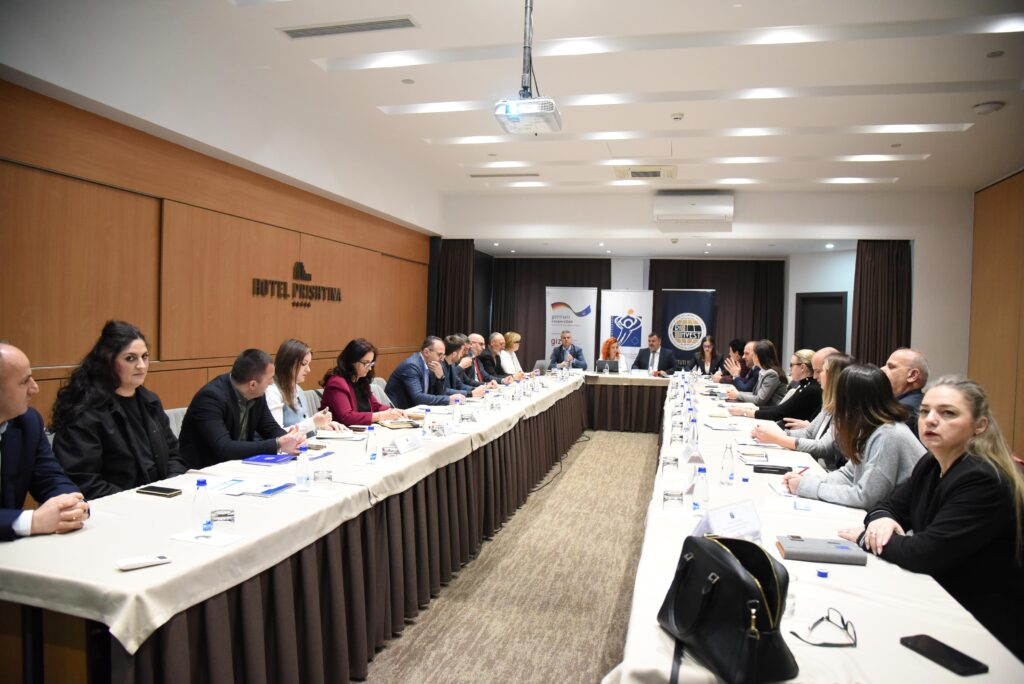
The roundtable “The Impact of Corruption on Human Rights” was held


Pristina, March 24th, 2026 – The Ombudsperson organized a roundtable on the topic “The Impact of Corruption on Human Rights” and discussed the findings of a research with representatives of the country’s institutions and civil society organizations.
The Ombudsperson, Mr. Naim Qelaj emphasized that it has conducted a survey with 1,040 citizens, from all municipalities of the country, in order to more clearly understand the connection between corruption and human rights in Kosovo, how corruption is defined, which areas are perceived as most exposed and how it affects fundamental human rights.
The vast majority of respondents identify corruption as a violation of public trust and a form of abuse of official position, regardless of whether it manifests itself through small bribes in everyday life or through high-level interventions in politics and administration.
The aspects where corruption is perceived to have the greatest negative impact are the judicial system (75.9 percent) and the health system (75.8 percent). Education ranks third (73.1 percent) signaling deep concerns that practices of bribery or favoritism in education are undermining equality in access and quality of education.
Similarly, practices of nepotism and political interference – hiring relatives through connections or financing party campaigns – were both considered clear forms of corruption by over 85 percent of respondents.
The Ombudsperson emphasized that corruption does not only affect human rights, but also the rule of law and equality before the law, which affects even human dignity, which is the most substantive part of human rights.
The research was conducted by the Riinvest Institute with support from GIZ and will be part of a broader report by the Ombudsperson.