




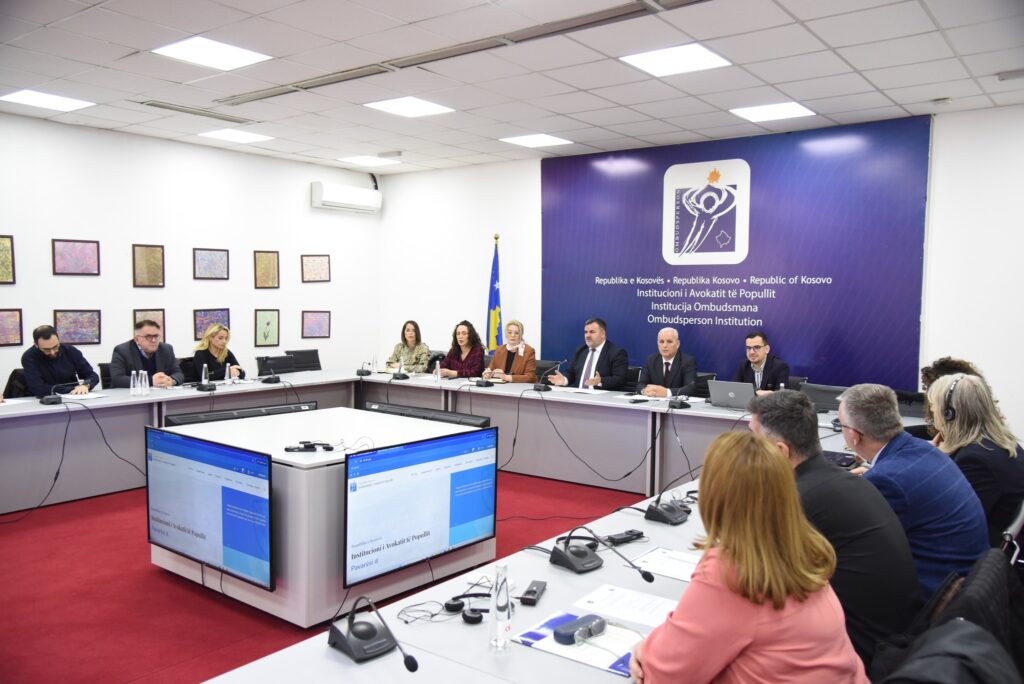
The Ombudsperson held a roundtable discussion on the treatment of people with mental disorders in secondary healthcare services


Prishtina, 27th February 2026 – The Ombudsperson held a roundtable discussion on the topic “Treatment of persons with mental disorders in secondary healthcare services with a focus on regional psychiatric departments”.
Following field visits to the psychiatric departments of regional hospitals in Prizren, Gjilan, Gjakova and Peja, the Ombudsperson invited representatives from the Ministry of Health, the Kosovo Hospital, Clinical and University Service (SHSKUK), representatives of mental health institutions, civil society and international organizations, to discuss the issues identified by the Ombudsperson, as well as the challenges faced by mental health institutions in the treatment of these cases.
The Deputy Ombudsperson, Mr. Basri Kastrati, presented the findings related to the respect of the rights of persons with mental disorders; the conditions of treatment of psychiatric patients; cases referred by court order; the right of patients to appeal, etc.
The Ombudsperson, Mr. Naim Qelaj, emphasized that persons with mental disorders, as a specific category, should be treated with dignity and their rights should be respected in accordance with local legislation and international standards.
He added that there are numerous gaps in local legislation, which he has addressed through reports with recommendations, emphasizing the conditions of treatment and involuntary treatment.
The participants discussed the challenges they are facing, such as the lack of medicines from the essential list, involuntary treatment, the stigmatization of persons with mental health problems, the treatment of persons ordered by courts who stay too long in psychiatric wards, and the conditions of treatment of patients in psychiatric departments in the regions. They agreed on the general findings of the National Mechanism for the Prevention of Torture (NMPT).
The roundtable aimed to draw attention and raise awareness, particularly among responsible authorities, about the sensitivity of mental health and the need for dignified and appropriate treatment of people affected by mental disorders.